
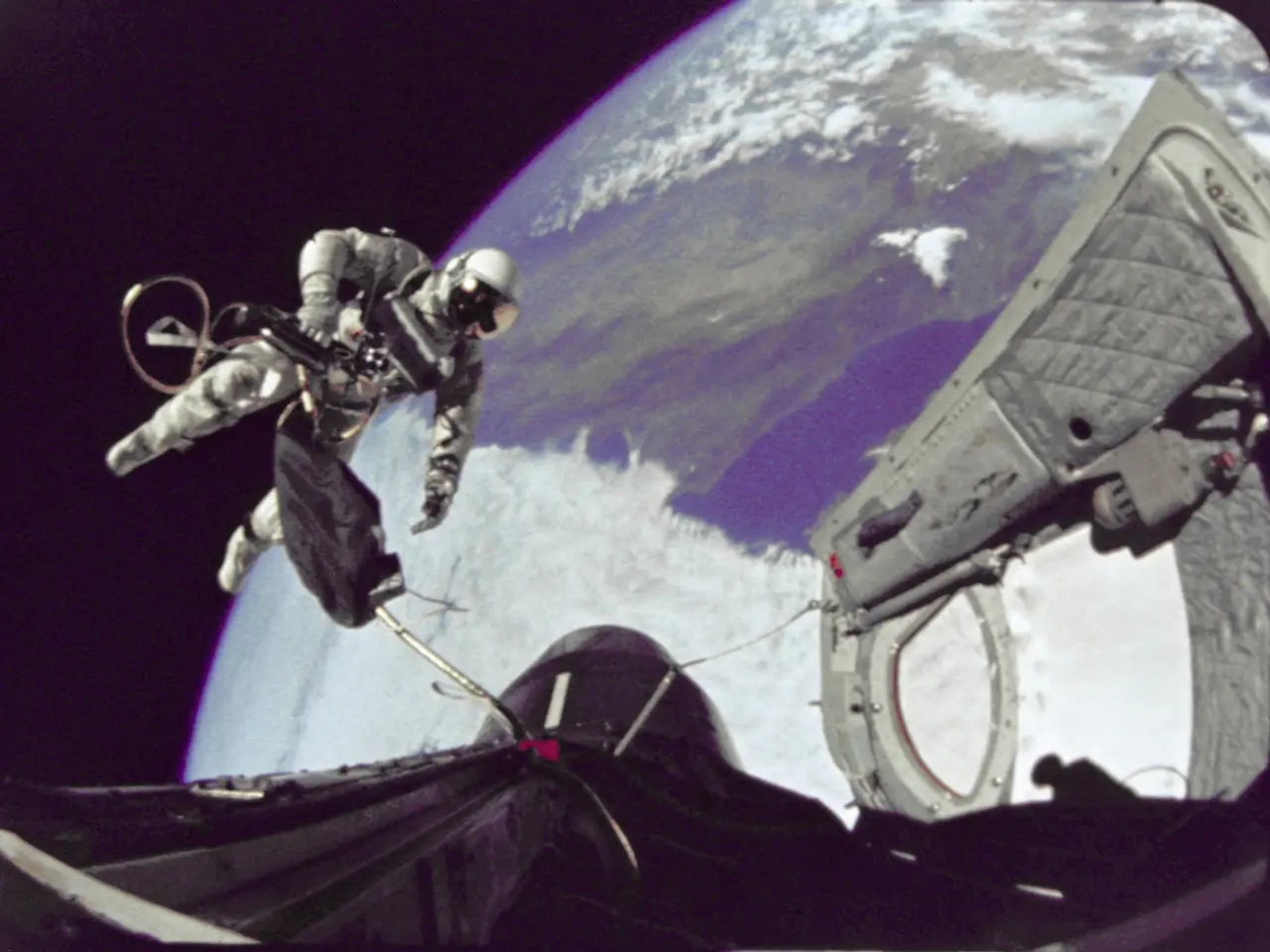
Space travelers depart for the space station following temporary grounding due to Boeing's malfunctioning Starliner spacecraft
The International Space Station (ISS) is set to welcome a new crew this weekend, but the journey to this point has been anything but smooth for NASA and its partners.
An air leak on the Russian side of the station remains unresolved after years of patching, but the focus is now on the American side, where NASA's Boeing Starliner program is facing technical issues. The spacecraft's propulsion system has been plagued by helium leaks, while thermal management around the thruster enclosures, known as "doghouses," has also caused concern.
As a result, the next Starliner mission is now planned for early 2026 at the earliest, with a strong possibility it will be an uncrewed cargo test flight rather than a crewed mission. This cargo flight aims to validate recent fixes before NASA can proceed to crew rotation flights, which it hopes to begin no earlier than late 2026, likely during the second crew rotation slot of that year.
NASA and Boeing are making progress, however. Thermal modifications to the thruster doghouses are underway, with the addition of thermal shunts and barriers to reduce heat issues, and new materials are being tested to improve seals that had issues with oxidizer vapor permeation during the Crew Flight Test.
The initially planned Boeing Starliner-1 operational mission, which would be the first reused Starliner spacecraft mission to the ISS, is postponed indefinitely due to these technical and certification uncertainties.
Meanwhile, the U.S.-Japanese-Russian crew of four astronauts, including Kimiya Yui, a former military officer with previous spaceflight experience, and Mike Fincke, NASA's co-pilot who was the backup for a previous mission on Boeing's Starliner, launched from NASA's Kennedy Space Center on Friday. They are traveling in a SpaceX capsule and are expected to stay at the ISS for at least six months.
SpaceX is also close to certifying its Dragon capsules for longer flights, which means the newly launched crew could be up there until April.
As NASA grapples with these challenges, its focus is on the future. NASA's new acting administrator, Sean Duffy, has made it clear that the direction the agency needs to be heading is from the moon to Mars. He has also expressed a desire to claim critical real estate on the moon for itself and its partners.
Duffy recently met with Dmitry Bakanov, the director general of Roscosmos, to discuss future collaboration. Time is running out, as NASA looks to abandon the aging space station by 2030, and the race to the moon and Mars is heating up.
[1] https://www.space.com/spacex-crew-4-launch-spacex-dragon-nasa-kennedy-space-center.html [2] https://www.space.com/boeing-starliner-spacecraft-helium-leak-issues.html [3] https://www.space.com/boeing-starliner-spacecraft-delayed-until-2026.html [4] https://www.space.com/boeing-starliner-spacecraft-thermal-shunts-improvements.html
- The technical issues with the Boeing Starliner's propulsion system, particularly the helium leaks and thermal management around the thruster enclosures, are hindering the advancement of space-and-astronomy technology.
- NASA's focus on the future, as outlined by acting administrator Sean Duffy, is centered on the development of science, with a goal of moving from the moon to Mars, demonstrating a stronger emphasis on the application of technology for space exploration.




