
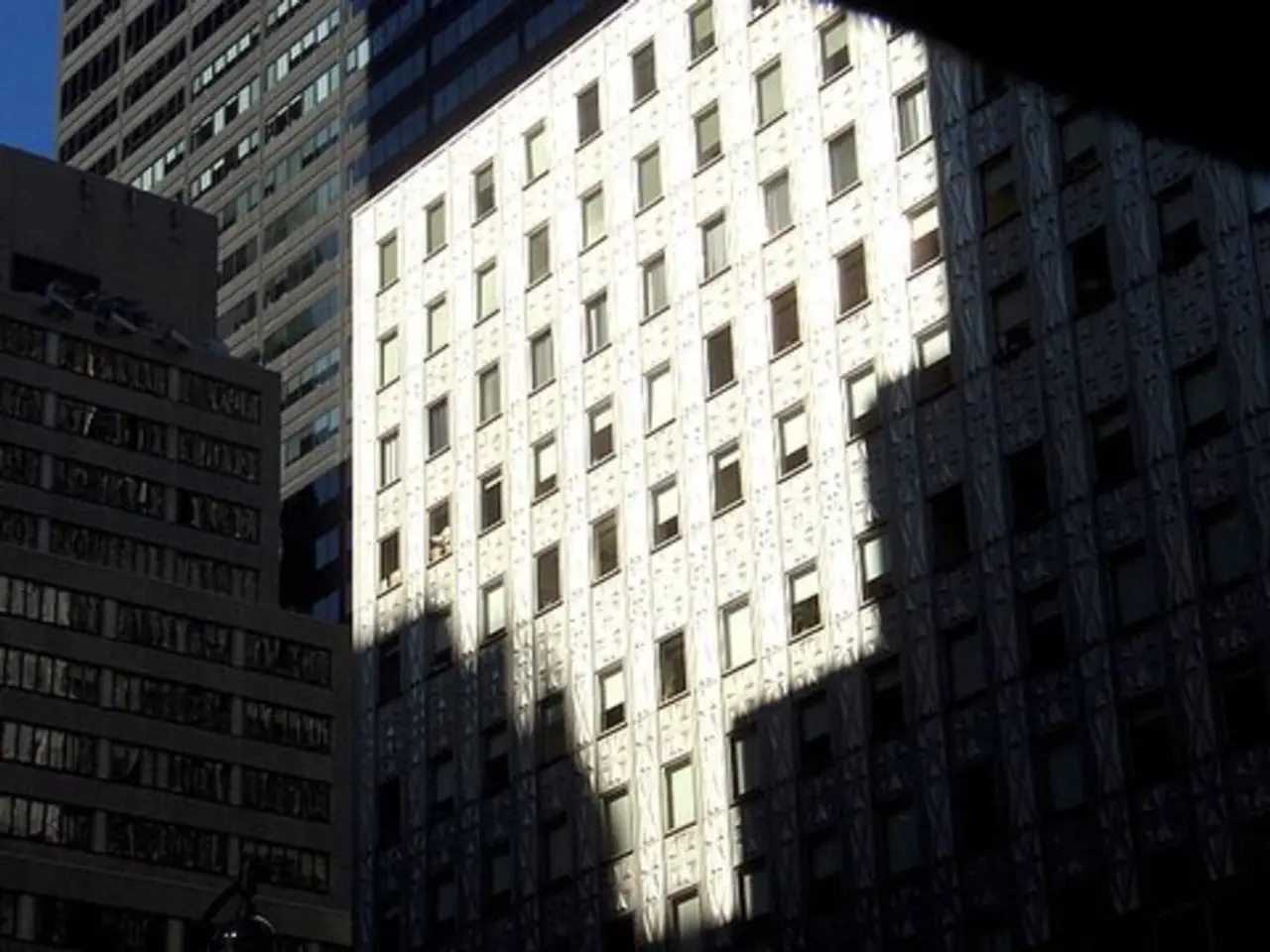
Recent Developments Shaping the Landscape of Business Architecture
In the world of commercial architecture, a shift towards sustainability is becoming increasingly prevalent. This movement prioritizes technology-driven efficiency, responsible material use, and holistic lifecycle design to create cost-effective, healthier, and environmentally conscious commercial spaces.
One prime example of this trend is The Prow, a biophilic retreat designed for Expedia Group's staff on their new corporate campus in Seattle. The aim is to create a sanctuary that integrates with the surrounding environment and promotes innovation.
Similarly, Cavatina Hall, a modern office building in Seattle, houses a concert hall and recording studio, promoting art and culture alongside its commercial functions. The concert hall was designed to have exceptional acoustics for all types of music performances.
Across the globe, in Shanghai, China, the Foxconn Headquarters features a double-skin curtain wall and movable louvers to reduce heat gain and glare. Meanwhile, in Seoul, South Korea, the Hanwha Galleria Gwanggyo boasts a textured mosaic stone facade.
In Tehran, Iran, the Hitra Commercial-Office Building optimizes natural lighting and views without altering the building's overall size. It includes a central void dedicated to the city. The Henderson, a 36-story tower in Hong Kong's financial district, is inspired by the city's emblem flower.
In China, the Wuhan Yangtze Culture and Tourism City Exhibition Center showcases the history and culture of the Yangtze River region, while the Chongqing Gaoke Group Ltd. Office Project, inspired by the sun constellation planning, towers in Chongqing.
Mixed-use buildings, which combine residential, retail, office, and other uses, are becoming increasingly popular. These structures create a more integrated and vibrant community. The BEEAH Headquarters in the Al Sajaa desert in Sharjah, UAE, is a prime example, being sustainable, energy-efficient, and powered by a solar array.
Sustainable and energy-efficient design is an emerging trend, with architects incorporating renewable energy sources and building materials that minimize energy consumption and waste. Digital technology is also playing an increasingly important role, with architects using it to create more interactive and immersive environments for users.
Accessibility design is another trend, with architects striving to create buildings that are welcoming and accessible to all users, including those with disabilities. Commercial architects work with clients to design buildings that meet their specific needs and requirements, using their expertise in spatial planning, materials selection, and building systems to create functional, efficient, and aesthetically pleasing spaces.
Key trends in sustainable commercial architecture design include bioclimatic design and smart automation, sustainable, high-performance materials, energy and water efficiency, waste reduction through circular design principles, seamless indoor-outdoor integration, and multifunctional spaces. These trends are important because they reduce environmental impact, lower operating costs, and improve occupant comfort and building asset value.
In conclusion, sustainable commercial architecture in 2025 emphasizes technology-driven efficiency, responsible material use, and holistic lifecycle design to create cost-effective, healthier, and environmentally conscious commercial spaces that meet evolving regulations and market demands.
- The shift in commercial architecture towards sustainability prioritizes not only technology-driven efficiency and holistic lifecycle design but also responsible material use and cost-effectiveness.
- Sustainable designs in architecture incorporate renewable energy sources and build materials that minimize energy consumption and waste, as well as digital technology for interactive and immersive environments.
- Accessibility is also essential in commercial architecture, as architects strive to create buildings that are welcoming and accommodating to all users, including those with disabilities.
- Bioclimatic design, smart automation, sustainable high-performance materials, energy and water efficiency, waste reduction through circular design principles, seamless indoor-outdoor integration, and multifunctional spaces are major trends in today's sustainable commercial architecture.
- Mixed-use buildings, combining residential, retail, office, and other uses, create a more integrated and vibrant community, as demonstrated by the BEEAH Headquarters in Sharjah, UAE.
- Across the globe, architects are integrating sustainable practices into their designs, whether it's The Prow in Seattle promoting innovation through biophilic design, or the Henderson in Hong Kong's financial district, inspired by the city's emblem flower.




