
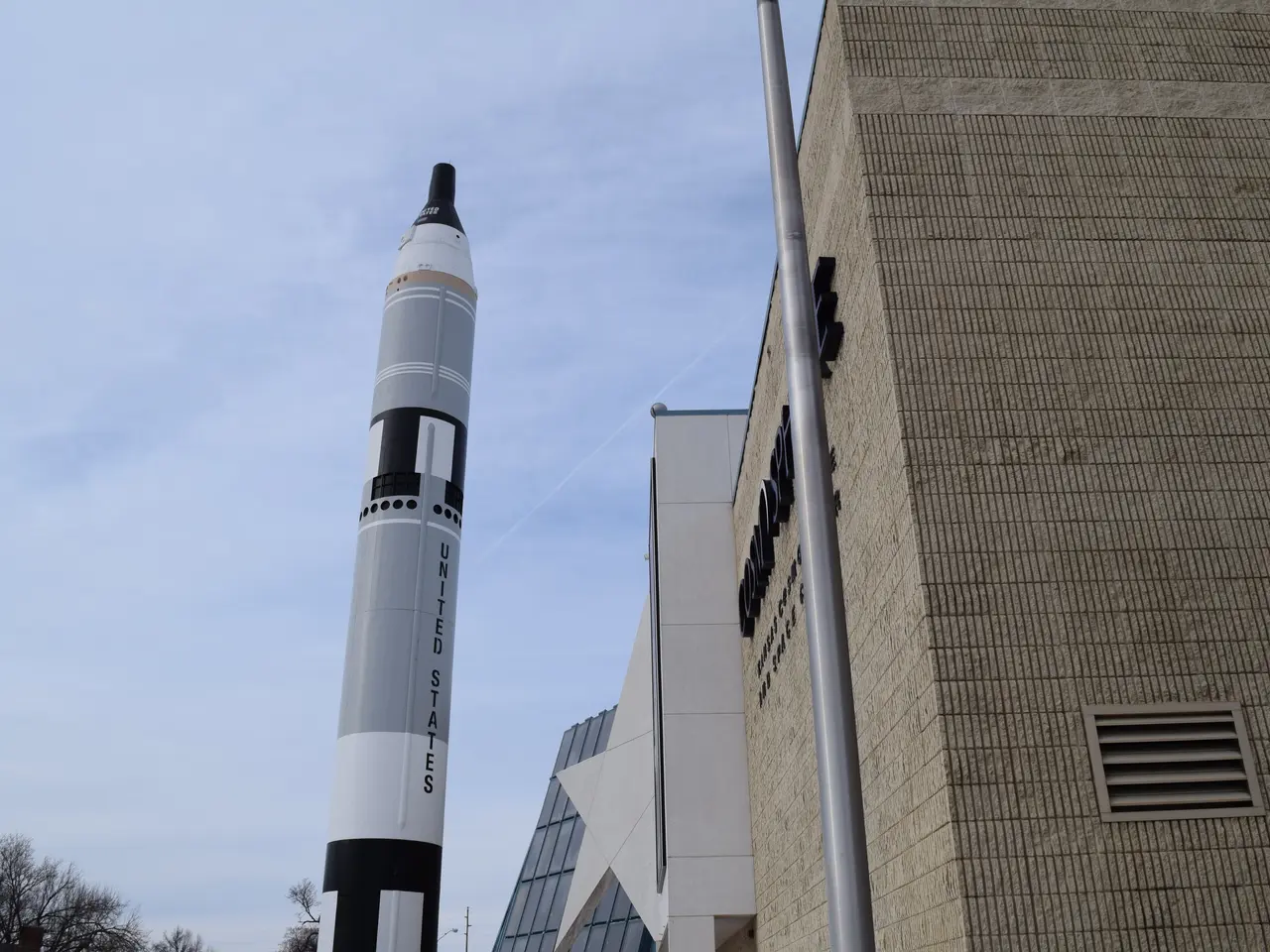
Prepared for its second journey into the cosmos, the New Glenn rocket stands ready for its significant mission.
NASA's ESCAPADE Mars mission, set to launch aboard Blue Origin's New Glenn rocket in mid-August 2025, marks a significant milestone in space exploration. This innovative mission, featuring two spacecraft named Blue and Gold, is the first multi-spacecraft orbital science mission dedicated to studying Mars' magnetosphere.
The twin spacecraft will delve into Mars’ magnetic environment and plasma dynamics, providing crucial insights into how the solar wind interacts with the planet’s magnetic fields. This understanding is essential for future human and robotic exploration, as it improves our knowledge of space weather effects at Mars.
In addition to its scientific objectives, ESCAPADE includes an additional technology demonstration payload related to NASA’s Communications Services Project. This highlights efforts to improve communications infrastructure for deep space missions.
The New Glenn rocket, which will embark on its second-ever flight (NG-2), will play a pivotal role in ESCAPADE's mission. This is an important step for New Glenn’s certification and future use in national security and planetary exploration launches. The rocket, powered by seven BE-4 engines, is approximately 2.5 times more powerful than the Falcon 9.
The launch was originally planned for October 2024 on New Glenn’s maiden flight but was delayed to August 15, 2025, to avoid risks and additional costs tied to rocket availability and readiness. The New Glenn rocket successfully debuted in January 2025, validating its performance and enabling ESCAPADE’s mission continuation.
The small probes for the ESCAPADE mission were built by Rocket Lab, demonstrating how sophisticated planetary science missions can be done at lower costs via public-private collaborations.
Blue Origin aims to recover the New Glenn rocket's first-stage booster from this flight, continuing its push for reusable rocket technology to lower launch costs and increase flight frequency. If successful, this would enable New Glenn to achieve first-stage reusability, potentially reducing costs and increasing launch frequency with its heavy-lift rocket.
Dave Limp, CEO of Blue Origin, expressed excitement about the upcoming ESCAPADE mission and thanked NASA for participating in the mission. He stated that the ESCAPADE mission to Mars will be an exciting endeavor for New Glenn and Mars exploration.
The ESCAPADE mission will also study how Mars's magnetic field interacts with the solar wind and drives the escape of elements from Mars's thin atmosphere into space. This mission, following NASA's 2020 launch of the Perseverance rover, will be NASA's first voyage to Mars since then.
With its innovative dual-spacecraft approach, collaboration with commercial launch providers, and focus on both science and technology demonstrations, ESCAPADE promises to significantly advance our understanding of Mars and pave the way for future exploration.
The twin spacecraft, Blue and Gold, of NASA's ESCAPADE Mars mission are designed to delve into Mars’ magnetic environment and plasma dynamics, using science to provide insights into how the solar wind interacts with the planet’s magnetic fields. Alongside its scientific objectives, ESCAPADE includes a technology demonstration payload related to NASA’s Communications Services Project, showcasing efforts to improve communications infrastructure for deep space missions, emphasizing the marriage of space-and-astronomy and technology.




