
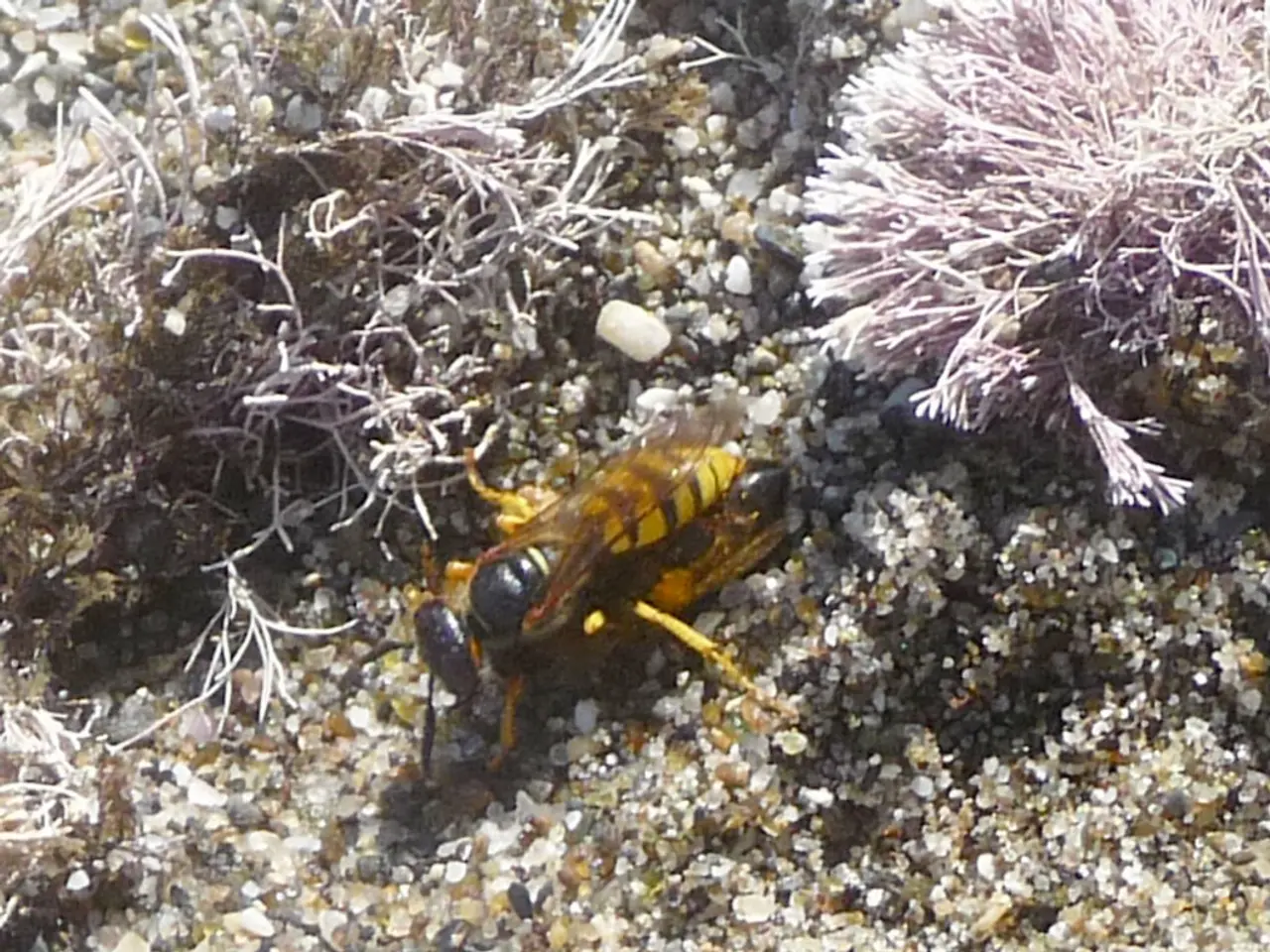
Nuclear site in the U.S. registers radiation levels ten times the safe standard due to a wasp nest
In a surprising turn of events, a radioactive wasp nest was recently discovered at the Savannah River Site (SRS) in Aiken, South Carolina. The nuclear site, once used for cooking up plutonium for bomb cores during the Cold War, is now primarily focused on manufacturing nuclear materials for power plants.
During a routine inspection by the US Department of Energy, the nest was found near storage tanks and was found to have radiation levels 10 times above federal limits. The nest was sprayed to kill the wasps and bagged as radiological waste.
Investigations suggest that the radiation in the wasp nest originated from "onsite legacy radioactive contamination" left from past nuclear weapons production activity at the site. There is no evidence of a current leak from the liquid nuclear waste tanks nearby, and the surrounding ground and area showed no contamination during the investigation.
Savannah River Mission Completion, which oversees the site, stated that no wasps were found on the nest and that individual insects would have significantly lower levels of contamination. The official report, however, has been criticised by watchdog group Savannah River Site Watch for not sufficiently detailing the contamination source, how the wasps encountered it, or the potential for more contaminated nests.
The group suggests that further investigation is needed because some wasps build nests from soil or other materials that could harbour contamination, implying a possibility of additional contaminated nests if undetected leaks exist.
Despite the discovery, the site and its surrounding area were found to be safe after the wasp nest was treated. The incident serves as a reminder of the historical radioactive contamination at the site and the need for continued vigilance in monitoring and managing such contaminants.
[References] [1] Savannah River Site Watch. (2022). Radioactive Wasp Nest Discovered at Savannah River Site. Retrieved from https://www.srswatch.org/radioactive-wasp-nest-discovered-at-savannah-river-site/ [2] US Department of Energy. (2022). Press Release: Radioactive Wasp Nest Discovered at Savannah River Site. Retrieved from https://www.energy.gov/articles/press-release-radioactive-wasp-nest-discovered-savannah-river-site
AI in science could be instrumental in analyzing soil samples around the Savannah River Site for potential undetected contaminated nests, ensuring the general public's safety. The regulation of radioactive materials remains crucial for preventing incidents like the recent wasp nest discovery. In the medical field, technology advancements could aid in monitoring and managing such contaminants, promoting overall health and well-being.
Such advancements are also relevant for other general-news stories involving radioactive materials, ensuring public safety and Crystal-clear communication. By integrating AI and technology in the realm of science, we can take proactive steps towards minimizing the impact of radioactive contamination on the environment and public health.




