
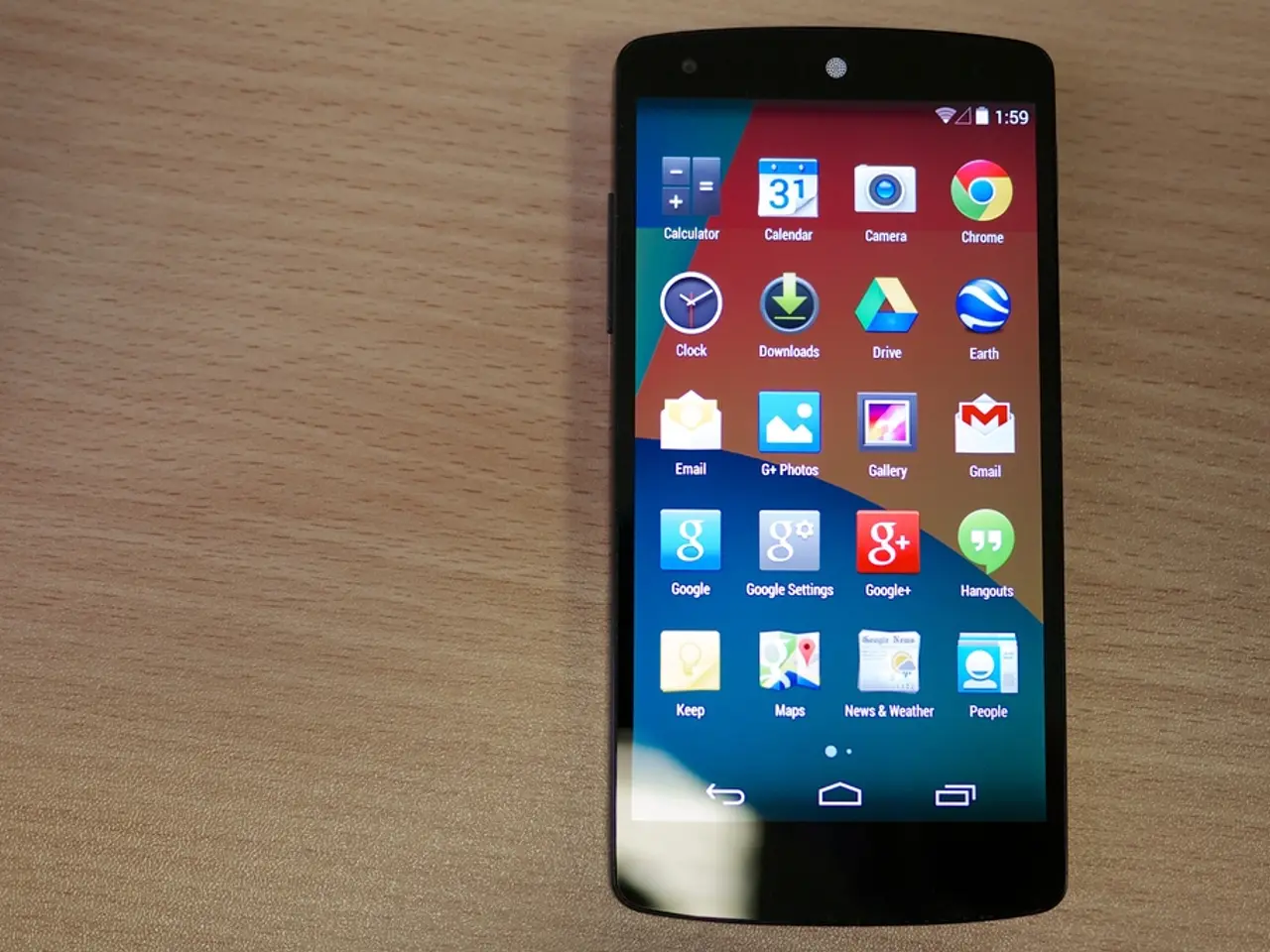
Mobile Application Interface (API) Explained: A crucial component for seamless app operation on smartphones
In the dynamic world of mobile app development, Application Programming Interfaces (APIs) play a pivotal role in connecting different applications, services, and systems, thereby enhancing functionality and user experience. This article explores some common APIs utilised in mobile app development and their specific applications.
One of the most popular APIs is the Google Maps API, which is essential for location-based services such as displaying maps, geolocation, and route planning. It is indispensable for apps that require navigation or location-specific features.
Social media integration is another area where APIs shine, with the Facebook API being a prime example. This API allows users to log in with their Facebook accounts and share content directly from the app, fostering a sense of community and seamless user experience.
Payment gateways, such as Stripe and PayPal, are crucial for secure transactions by integrating payment processing into mobile apps, handling card details, subscriptions, and refunds with ease.
Weather information is another essential aspect for many apps, and the Weather API provides current weather conditions and forecasts, making it a valuable tool for weather-related apps.
Twitter integration is also facilitated through the Twitter API, enabling apps to post tweets, retrieve timelines, or even allow login with Twitter.
Depending on the framework, developers can access device APIs to utilise hardware features like the camera, microphone, or GPS. For instance, React Native and Flutter access these through native modules or plugins, while Apache Cordova allows access to native device APIs using JavaScript.
Framework-specific APIs like Flutter, React Native, and Xamarin each offer unique ways to interact with native APIs, providing a seamless native experience. iOS (Swift and SwiftUI) and Android (Kotlin) also utilise native APIs for hardware-specific features.
APIs are not just limited to the ones mentioned above; they can be custom-built to meet specific requirements or purchased from various providers. For instance, the AccuWeather API offers a subscription model for access to its powerful real-time weather data, while the Creative Suite API can enhance a mobile app's capabilities by integrating design functionalities.
RESTful APIs, such as the ones discussed, are architectural structures for APIs that use HTTP requests to access and use data. They have become commonplace on the Internet and mobile apps, and without them, the Internet as we know it would not exist.
API keys are used to prevent abuse, restrict access, and track usage patterns. When an API is purchased, the user receives an API key, a unique identifier and authentication token used by developers.
In conclusion, APIs are integral to mobile app development, allowing apps to share information and extend their functionality, thereby creating immersive digital experiences for end-users. From location-based services to social media integration and payment processing, APIs are the backbone of modern mobile applications.
- Designing user interfaces (UI) for a mobile application can be enhanced with the Adobe Creative Suite API, allowing for seamless integration of design functionalities.
- The mobile lifestyle today is greatly influenced by cloud technology, where APIs like Google Firebase or AWS provide cloud storage and real-time data synchronization services for mobile apps.
- Augmented Reality (AR) can be integrated into mobile applications for an engaging user experience using ARCore and ARKit APIs, which offer hardware-specific features and interactive experiences.
- To create immersive web experiences, APIs like Stripe, PayPal, or Square can be utilized for seamless payment processing and transactions within web applications.
- In the future of technology, we can expect APIs to evolve with advancements in technology, such as the integration of Artificial Intelligence (AI) into APIs, enabling smarter and more intuitive mobile applications.




%20Explained%3A%20A%20crucial%20component%20for%20seamless%20app%20operation%20on%20smartphones)