
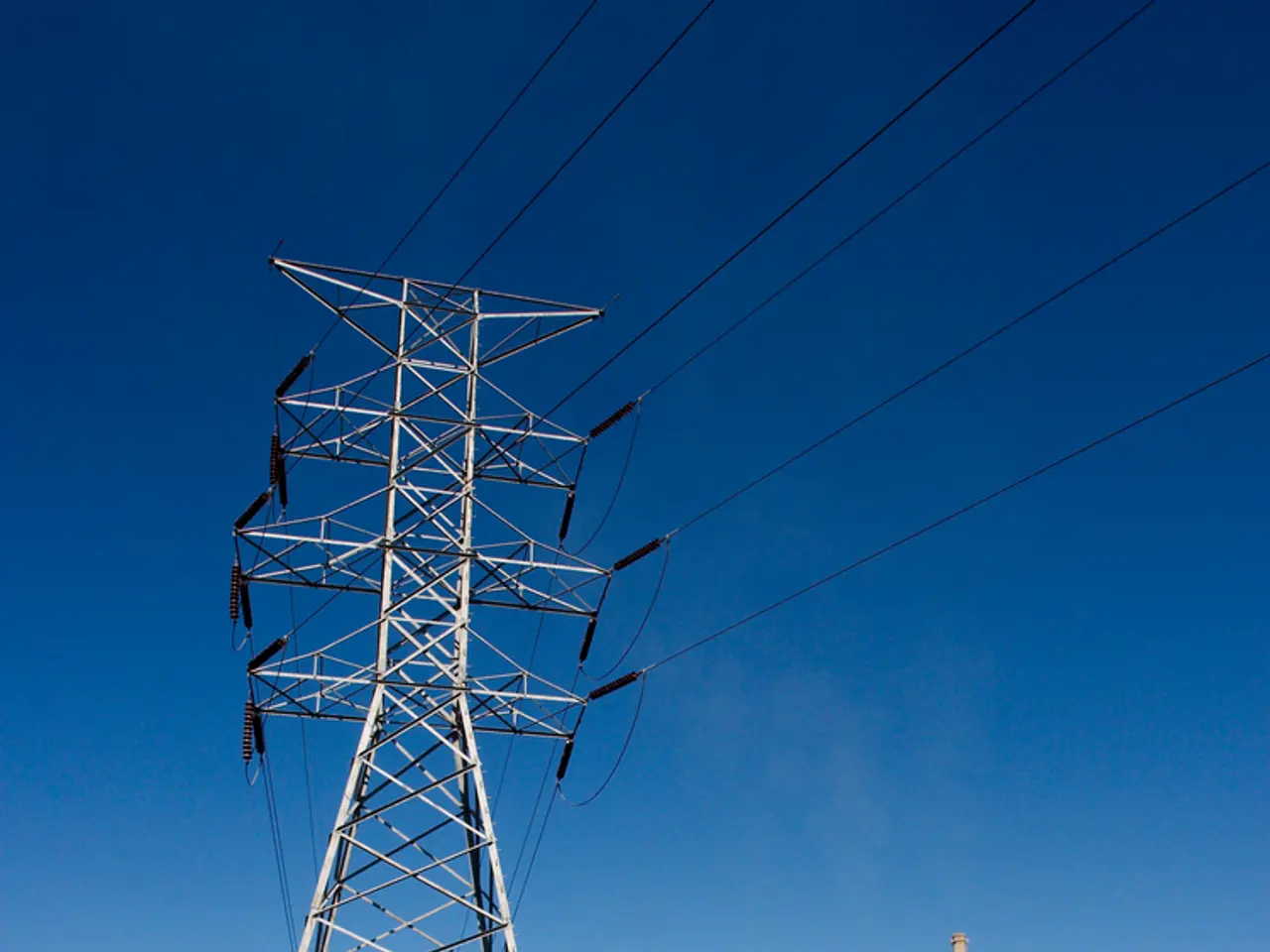
Large coil weighing 20 tonnes used to safeguard the electric power grid
High-Voltage Coil in Power Grid Stops Service After 52 Years
In a region serviced by the central power supplier, the WSW, a high-voltage coil that has been a reliable part of the power grid for five decades has ceased functioning. Weighing 20 tons, this essential component played a crucial role in maintaining the stability and safety of the power grid.
High-voltage coils, often found in transformers or reactors, help prevent power outages during fault current situations by limiting and controlling the fault current magnitude and improving voltage stability across the network. During a fault, such as a short circuit, the fault current can rise rapidly and to high levels, risking damage to equipment and destabilizing the grid.
The coil's inductive properties act to smooth voltage and current fluctuations during faults, supporting grid reliability and preventing cascading failures. By introducing inductive reactance, the coil opposes sudden changes in current, limiting the rate of rise and peak magnitude of fault currents. This helps protect grid equipment from damage, maintain voltage stability, and allow protective devices more time to detect and isolate the fault, minimizing the likelihood of widespread outages.
The WSW explains that if the insulation of a cable in the power grid fails, the current from inside the cable can flow directly to the ground, causing a fault current. In such cases, the affected network area would typically have to be shut down immediately due to potential danger. However, the intervention of the high-voltage coil allows technicians to locate and repair faults without causing power outages for households.
The high-voltage coil at the WSW substation on Wilbergstraße is responsible for transforming high-voltage electrical energy (110,000 volts) to medium voltage (10,000 volts). The transformed electrical energy is then distributed to 10-kV stations for use in households and businesses. The substation is a crucial point in the distribution of electrical energy, ensuring a stable and safe power supply for the region.
The WSW's explanation clarifies the potential dangers of a fault current in a power grid and emphasizes the importance of high-voltage coils in maintaining the stability and safety of a power grid. The high-voltage coil balances out fault currents to maintain stability, making it an indispensable part of the power grid.
The dismantling and reinstallation of the high-voltage coil required specialized equipment, including a low loader for transportation and a mobile crane with a 230-ton lifting capacity and an extended boom. Due to the coil's size and location, the mobile crane had to span a considerable distance to reach the low loader, as it couldn't drive directly up to the substation.
As the high-voltage coil has ceased functioning, the WSW is working diligently to replace it and restore the stability and safety of the power grid. The replacement of this essential component will ensure the continuous and reliable supply of electricity to households and businesses in the region.
In the wake of the high-voltage coil's failure, the power grid's stability and safety are at risk, considering the coil's role in controlling fault currents and voltage stability in the energy industry. The replacement of the malfunctioning coil is crucial for the continual flow of finance from industries and households that rely on the stable power supply.
Technological advancements have equipped engineers with machinery such as low loaders and mobile cranes, making it possible to replace the asset efficiently. However, the complex nature of the technology involved in the power grid necessitates the utmost precision to minimize potential disruptions in the finance, energy, and technology sectors.




