
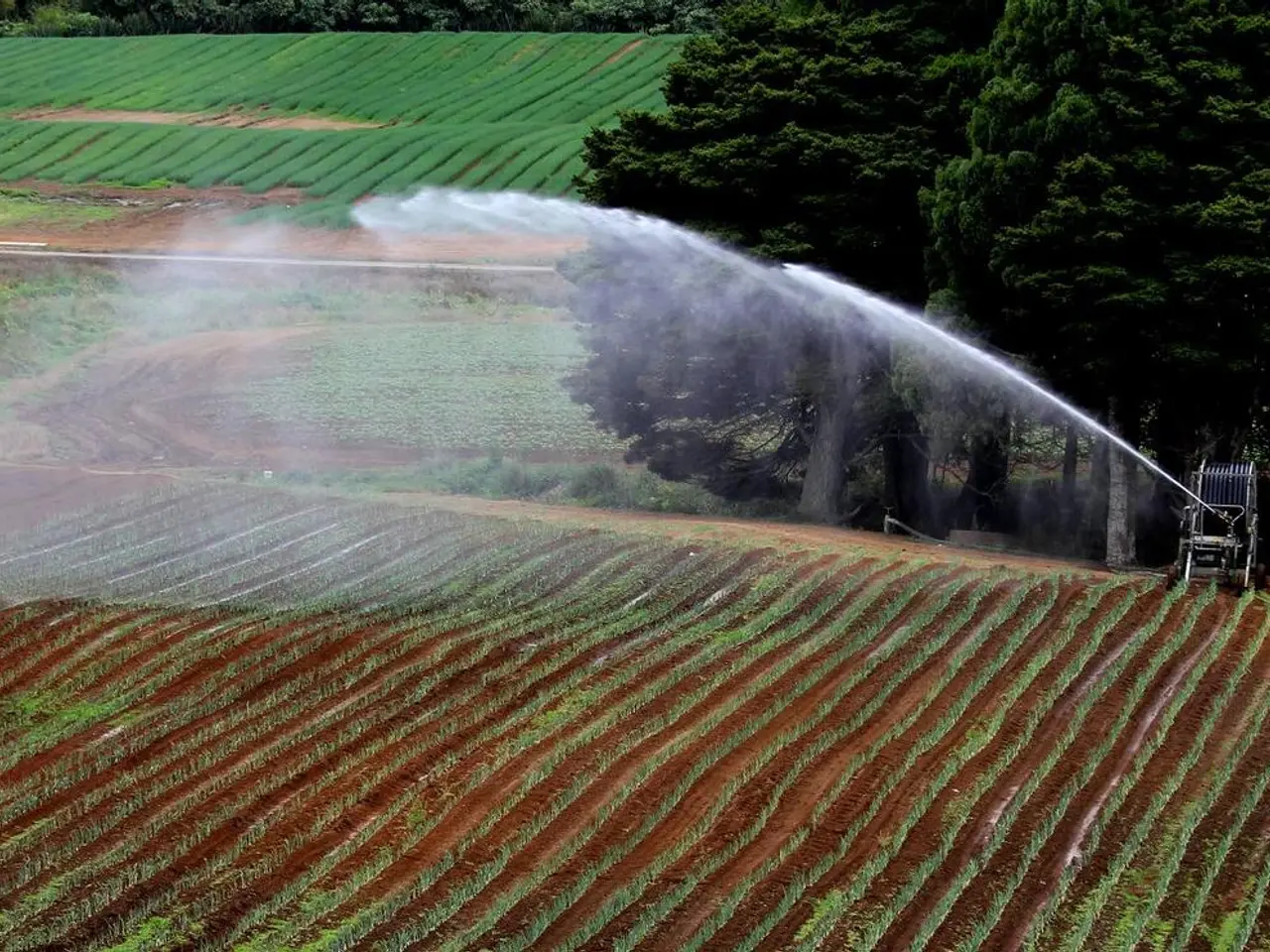
In-depth Guide to Modern Farming Spraying Methods
Modern Agriculture Spraying Technologies Revolutionize Farming Practices
Modern agriculture spraying technologies are transforming the way farmers work, offering substantial advancements and benefits over traditional methods. These innovative technologies, integrated with precision agriculture and drone systems, are providing precision, efficiency, and sustainability in the application of fertilizers, pesticides, herbicides, and other crop-protection chemicals.
Precision Application and Resource Efficiency
One of the key advantages of modern spraying technologies is their precision. AI-assisted drones, for instance, can precisely apply pesticides, herbicides, and fertilizers only where needed, leading to up to a 15% increase in crop yields by avoiding over-application and targeting crop needs accurately [1][4]. Additionally, these technologies reduce the overuse of chemicals and water, minimizing environmental damage and operational costs. Targeted spraying and advanced biofertilizers can cut chemical use by up to 40% while improving nutrient uptake and soil health [1][4][5].
Labor and Time Savings
Agricultural spray drones dramatically reduce the time and labor compared to manual spraying. Drones like the DJI Agras T40 can cover large areas quickly with uniform distribution, increasing efficiency and reducing human exposure to harmful substances [2][3].
Advanced Technology Integration
Spray drones equipped with AI-powered planning, terrain-following systems, and radar technology enhance spraying uniformity and adaptability to field conditions, thus minimizing waste and increasing effectiveness [3].
Scalability and Accessibility
Modern technologies are becoming more affordable and scalable, suitable even for small-scale farms. The integration of sensors, drones, and data analytics supports informed decision-making at all farm sizes [1][4].
Sustainability and Environmental Impact
By reducing chemical runoff and soil degradation, these new methods promote more sustainable farming practices critical to long-term productivity [4].
Other Innovative Techniques
Electrostatic spraying is another modern technique that uses electric charges to attract and adhere particles to surfaces, potentially increasing the effectiveness of the application. This method reduces the intended float of droplets to accidental areas by charging the droplets before they exit the sprayer [6].
Robotic spraying, using drones, can quickly cover vast regions, especially in untidy or uneven fields. It can also reach places where human labor or agricultural haulers might struggle [7].
Integration for Optimal Results
The integration of modern spraying technologies will play a critical role in meeting global food demand while protecting the environment and promoting sustainable farming practices. Smart sprayers can be integrated with weather stations to avoid spraying in conditions where chemicals might drift or evaporate [8]. GPS-based spraying uses GPS to configure fields and manage the sprayer's progress, adjusting the amount of chemical applied based on field conditions [9]. Variable Rate Technology (VRT) sprayers allow farmers to apply varying amounts of manure or insecticide to different areas of a field, increasing asset utilization and reducing flooding [10]. Information-Driven Decisions can determine the optimal shower time using sensors and data analysis, ensuring the highest level of efficiency while minimizing common effects [11].
A Sustainable Future for Agriculture
As these technologies continue to evolve, they are likely to play an increasingly important role in agriculture. By focusing on certain plants or areas, mechanical sprayers can reduce the amount of compounds used in agriculture [3]. Furthermore, the consideration of biopesticides and low-volume irrigation in modern agriculture is a step towards more environmentally friendly practices [12]. The integration of these technologies will not only boost crop yields but also contribute to sustainable farming by reducing waste and improving crop yields.
Sustainable agriculture can be enhanced through the integration of technology such as precision spraying systems, which use AI-assisted drones and sensors to apply pesticides and fertilizers efficiently, thus reducing chemical usage and promoting a healthier environment [1][4].
The use of technological advancements, including robotics and electrostatic spraying, in modern agriculture aims to improve spraying uniformity, minimize waste, and contribute to sustainable farming practices essential for long-term productivity and environmental conservation [6][7].




