
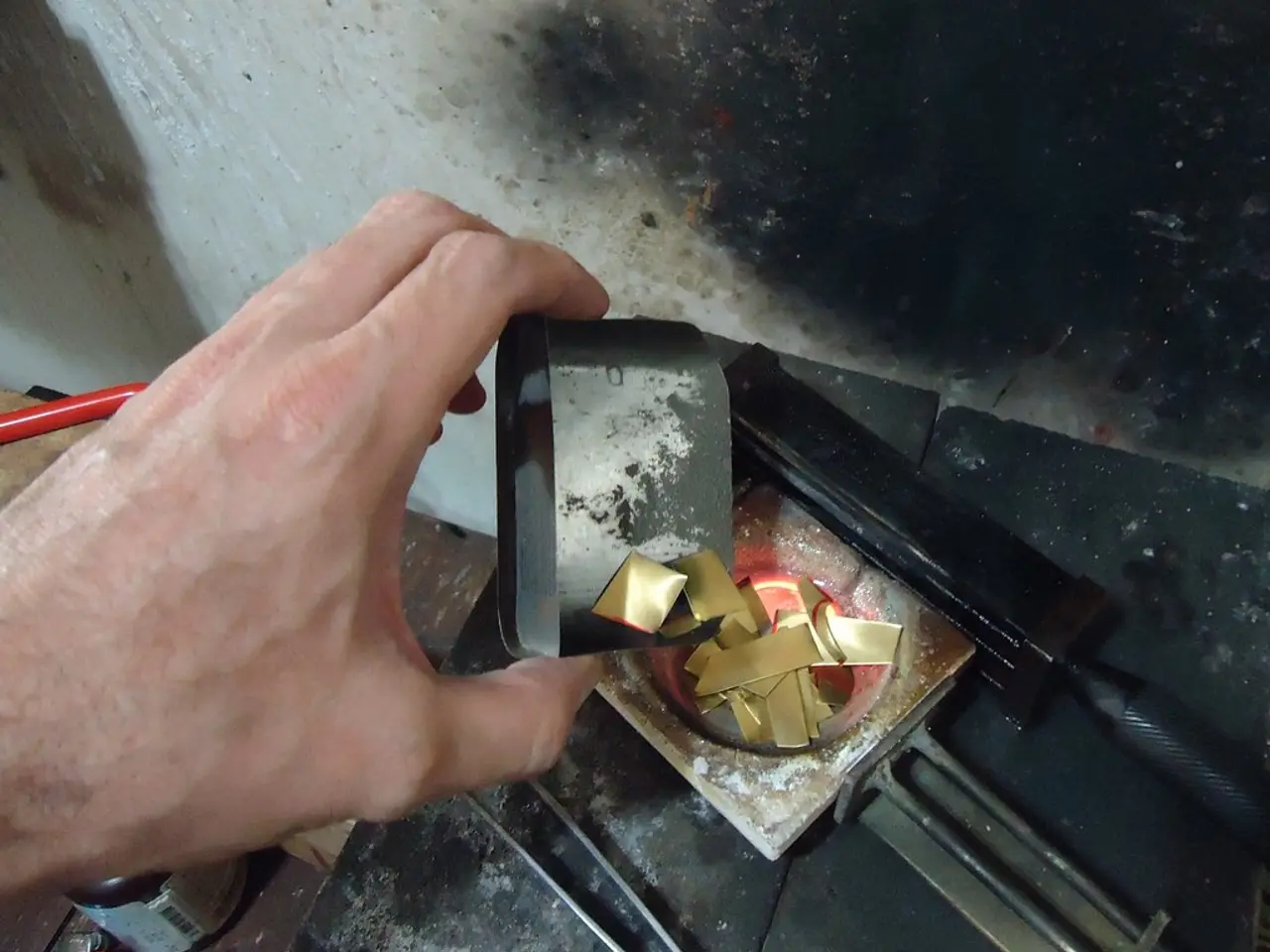
Exploring the Techniques of Gold Refining: An In-Depth Analysis of the Smelting Method!
In the heart of gold production lies the gold smelting furnace, a marvel of technology that transforms raw gold ore into the precious metal we know and admire. This process, a captivating blend of art and science, involves mining, crushing, milling, and heating in a gold smelting furnace.
Gold, with its lower melting point compared to most other metals, liquefies while other minerals remain solid during the smelting process. The raw ore, containing gold and various impurities, is first crushed and concentrated before being introduced into the furnace. Here, it is heated to temperatures between 1064°C (the melting point of gold) and higher, ensuring complete melting.
Inside the furnace, fluxes like borax and silica are added to bind with impurities and form slag, which floats on top, separating from the molten gold. The scientific principle involved is thermal decomposition and chemical reduction: heat breaks down compounds and ore minerals, while reducing agents (often carbon-based) remove oxygen and other impurities, allowing gold to be freed and collected as molten metal.
The process relies on precise temperature control to maintain the molten state of gold without excessive oxidation and to optimize slag formation. Control of thermal gradients within the furnace enhances efficiency by ensuring uniform melting and impurity separation. The furnace atmosphere is often controlled to be inert or reducing to prevent gold oxidation and contamination.
Technological advancements have bolstered the value and appeal of gold in the market by improving output quality. Modern gold smelting furnaces are designed for improved efficiency, reducing the time and energy required to smelt gold. They can achieve higher purity levels, ensuring that the gold produced meets the highest standards.
Modern gold smelting furnaces leverage induction heating, inert atmospheres, and precise thermal controls to enhance both efficiency and safety compared to older batch or coke-fired methods commonly used in earlier industrial periods. Innovations such as induction furnaces, better thermal management, inert gas atmospheres, automation and monitoring, and improved materials and insulation have revolutionised the gold smelting industry.
The next time you admire a gold item, remember the intricate process that took place in a gold smelting furnace, transforming raw ore into the beautiful metal you see. The creation of pure gold is a testament to the smelter's artistry and expertise. Gold smelting is not just about producing a valuable metal; it's also about creating something beautiful.
The science of thermal decomposition and chemical reduction plays a crucial role in the gold smelting process, where heat breaks down compounds and ore minerals, and reducing agents remove oxygen and impurities to free and collect gold as molten metal.
Advancements in technology have significantly improved the quality of gold produced, with modern gold smelting furnaces designed for enhanced efficiency, purity, safety, and aesthetic appeal.




