
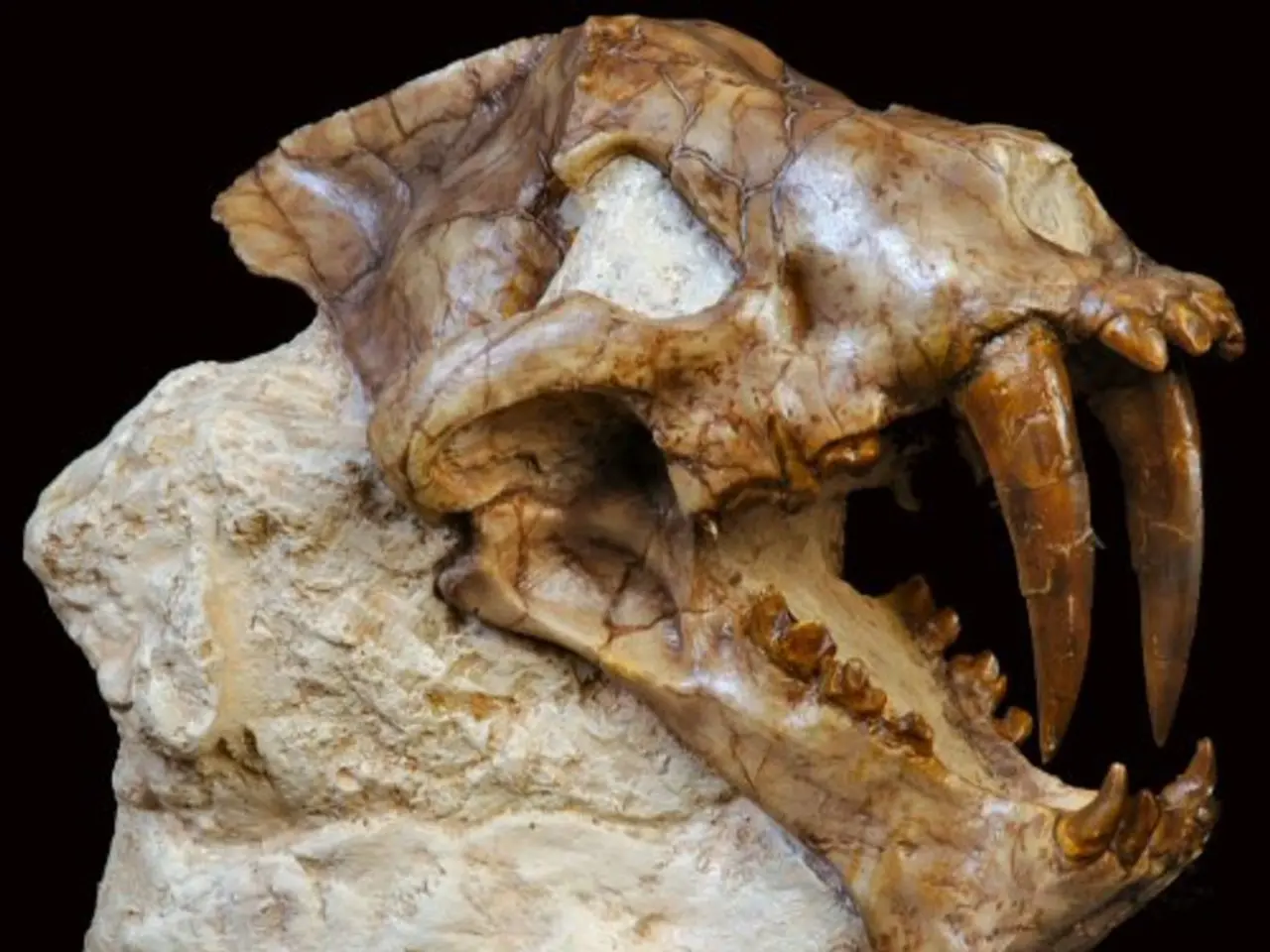
Discovered Fossils That Could've Been Overlooked, Offering Crucial Evolution Insights
In the vast expanse of Earth's history, identifying the missing link fossils has long been a captivating pursuit for scientists. This challenging process, requiring a keen eye, meticulous research, and often a stroke of luck, sheds light on the intricate web of life and evolutionary transitions.
These missing link fossils, transitional fossils that represent evolutionary stages between major groups, offer invaluable insights into our evolutionary history. They showcase intermediate features that help us trace the gradual transitions from apes to humans, or invertebrates to the first vertebrates, filling critical gaps in our understanding of these transformative periods.
Some key examples of these fascinating discoveries include:
- Sahelanthropus and Orrorin, fossil hominins dating back approximately 6-7 million years, are among the oldest known after the human lineage separated from apes. Primarily bipedal, these early ancestors had small brains, blending ape-like and human traits, and helping bridge the gap between our common ancestors and later hominins.
- Ardipithecus, an early hominin from Africa dating back about 4.4 million years, showcases traits of both arboreal and bipedal locomotion. This transitional species fills an evolutionary gap between earlier species like Sahelanthropus and later Australopithecus.
- Australopithecus, exhibiting an upright stance like humans but retaining a small brain size similar to apes, provides a unique glimpse into the gradual transition towards modern humans. Its anatomy combines human and ape features, offering insights into this crucial period in our evolutionary history.
- Early vertebrate ancestors such as Pikaia, Myllokunmingia, and Haikouichthys, fossils dating from the Cambrian to Ordovician periods, illustrate the transition from invertebrates to the first vertebrates. These discoveries help us understand the emergence of vertebrates and the complex steps involved in this evolutionary leap.
However, not all claimed missing link fossils have stood the test of time. The Piltdown Man, once hailed as a missing link, was later exposed as a fraudulent composite of human and orangutan bones stained to resemble an ancient relic. This unfortunate episode underscores the importance of rigorous scientific validation in paleoanthropology.
As we continue to explore Earth's history, the potential for uncovering more missing link fossils remains vast. Each new discovery holds the promise of reshaping our understanding of evolution and the intricate web of life. Advancements in technology, such as CT scanning and 3D modeling, have significantly improved the examination of fossils, making these discoveries increasingly possible.
One such discovery was the Tiktaalik, a fossil found in the Canadian Arctic in 2004, exhibiting characteristics of both fish and tetrapods. This finding represents a crucial evolutionary step towards land-dwelling animals, with its fins evolving into primitive limbs.
Another intriguing discovery is Australopithecus sediba, a missing link fossil discovered in South Africa in 2008. This unique species showcases a blend of ape-like and human-like features, sparking debates and challenging existing theories about human evolution.
The study of missing link fossils offers valuable insights into how species have adapted to environmental changes throughout Earth's history. By tracing the lineage of various organisms and revealing shared ancestry, we gain a broader perspective on the history of life on Earth.
Each new discovery of a missing link fossil brings us closer to understanding the evolutionary puzzle and encourages a deeper appreciation for the diversity and complexity of life on Earth. As technology advances and our knowledge deepens, the unseen corridors of the past, filled with hidden stories that have shaped the world we know today, will gradually come to light.
- Paleontology, with its meticulous research, helps uncover missing link fossils, like Sahelanthropus and Orrorin, which showcase a blend of ape-like and human traits, illuminating the evolutionary history.
- Environmental-science, specifically the study of biodiversity, gains valuable insights by examining fossils, such as Australopithecus, exhibiting an upright stance but retaining a small brain size like apes, revealing the gradual transition towards modern humans.
- Space-and-astronomy may seem unrelated to the search for missing link fossils, but advances in technology, like CT scanning and 3D modeling, have significantly improved their examination, leading to groundbreaking discoveries like Tiktaalik, exhibiting characteristics of both fish and tetrapods.
- In the field of medical-conditions, understanding the evolutionary history can provide researchers with insights into the genetic roots of diseases, making fossils like Australopithecus sediba, with a blend of ape-like and human-like features, particularly intriguing.
- As we continue our journey through Earth's history, the potential for finding missing link fossils in various ecosystems, from the depths of the oceans to the highest mountain ranges, remains vast, shedding light on the intricate web of life and evolutionary transitions.




