
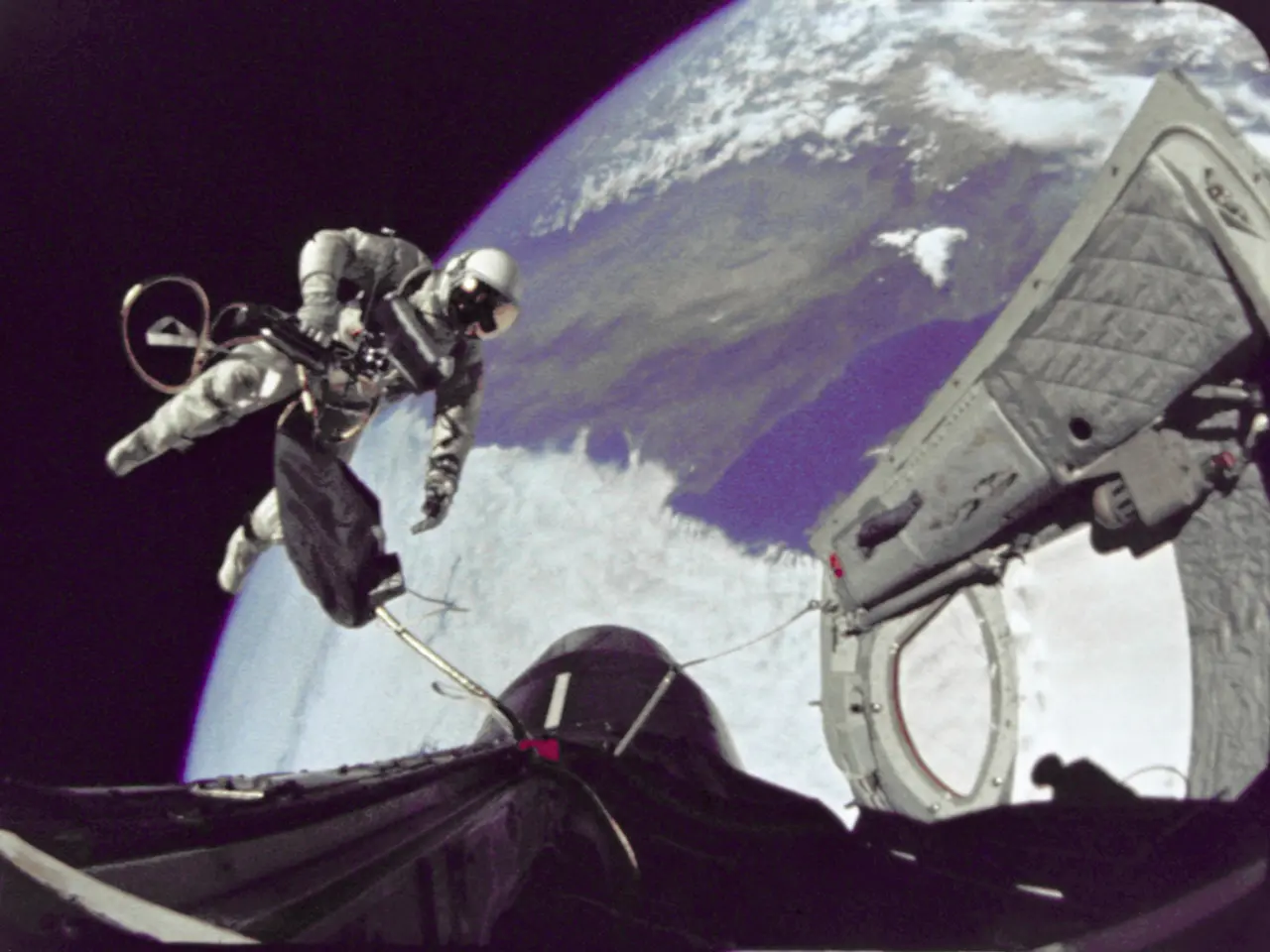
Crew completes five-month long space voyage, landing back on Earth via SpaceX after staying at the International Space Station
NASA Astronauts Return Home After Historic Pacific Splashdown
In a significant milestone for space exploration, four astronauts, including Anne McClain, Nichole Ayers, Takuya Onishi, and Kirill Peskov, returned to Earth on Saturday after a successful mission aboard SpaceX's Dragon spacecraft. The astronauts splashed down off the Southern California coast on Sunday, marking the first time in nearly 50 years that NASA astronauts returned to Earth via a splashdown in the Pacific Ocean.
The Crew-10 mission, part of NASA's partnership with SpaceX, was originally intended to replace the two NASA astronauts assigned to Starliner's botched demo. However, due to malfunctions with the Starliner, Butch Wilmore and Suni Williams were left stranded at the International Space Station for over nine months. NASA, in response, ordered Boeing's new crew capsule to return empty and switched Wilmore and Williams to SpaceX. Wilmore, who has since retired from NASA, was not part of the Crew-10 mission.
The Pacific splashdown was a strategic shift from previous splashdowns in the Atlantic or Gulf of Mexico. This change minimized the risks associated with debris falling on populated areas, reflecting improved mission safety planning. The event highlighted the advancements in commercial crewed spaceflight and demonstrated the safe, reliable, and repeatable return capabilities of SpaceX’s Dragon spacecraft under NASA’s Commercial Crew Program.
The Dragon capsule used in the Crew-10 mission was a seasoned vehicle, having served on multiple missions before. This showcased the cost-effective reuse of hardware, a key aspect of NASA's collaboration with commercial partners. The mission supported important scientific research on human health and technologies for long-duration spaceflight, which benefit both space exploration and Earth applications.
Upon their return, the astronauts expressed their eagerness for simple pleasures such as hot showers and juicy burgers. McClain, in particular, looked forward to "doing nothing for a couple of days" once back home in Houston. She also noted "some tumultuous times on Earth" before leaving the space station, emphasizing the mission as a reminder of what people can achieve when they work together, when they explore together.
This was the first time for a NASA crew to experience a Pacific homecoming after back-to-back private crews. In fact, the last time NASA astronauts returned to the Pacific from space was during the 1975 Apollo-Soyuz mission, a historical détente meet-up of Americans and Soviets in orbit. Elon Musk's company, SpaceX, switched capsule returns from Florida to California's coast earlier this year to reduce the risk of debris falling on populated areas.
The Crew-10 Pacific splashdown represents a key evolutionary step in NASA's collaboration with commercial partners, re-establishing Pacific splashdowns after decades and advancing human spaceflight capabilities for future missions. This event underscores the maturity and reliability of commercial crewed spacecraft for ISS missions, moving beyond reliance on government-only spacecraft.
The Crew-10 mission, with its historic Pacific splashdown, underscores the advancements in commercial crewed spaceflight, reflecting the maturity and reliability of SpaceX's Dragon spacecraft in space-and-astronomy technology. Anne McClain and her colleagues' return marks a significant milestone, reviving the tradition of Pacific splashdowns for NASA astronauts last seen during the 1975 Apollo-Soyuz mission, showcasing the progress in science and technology.




