
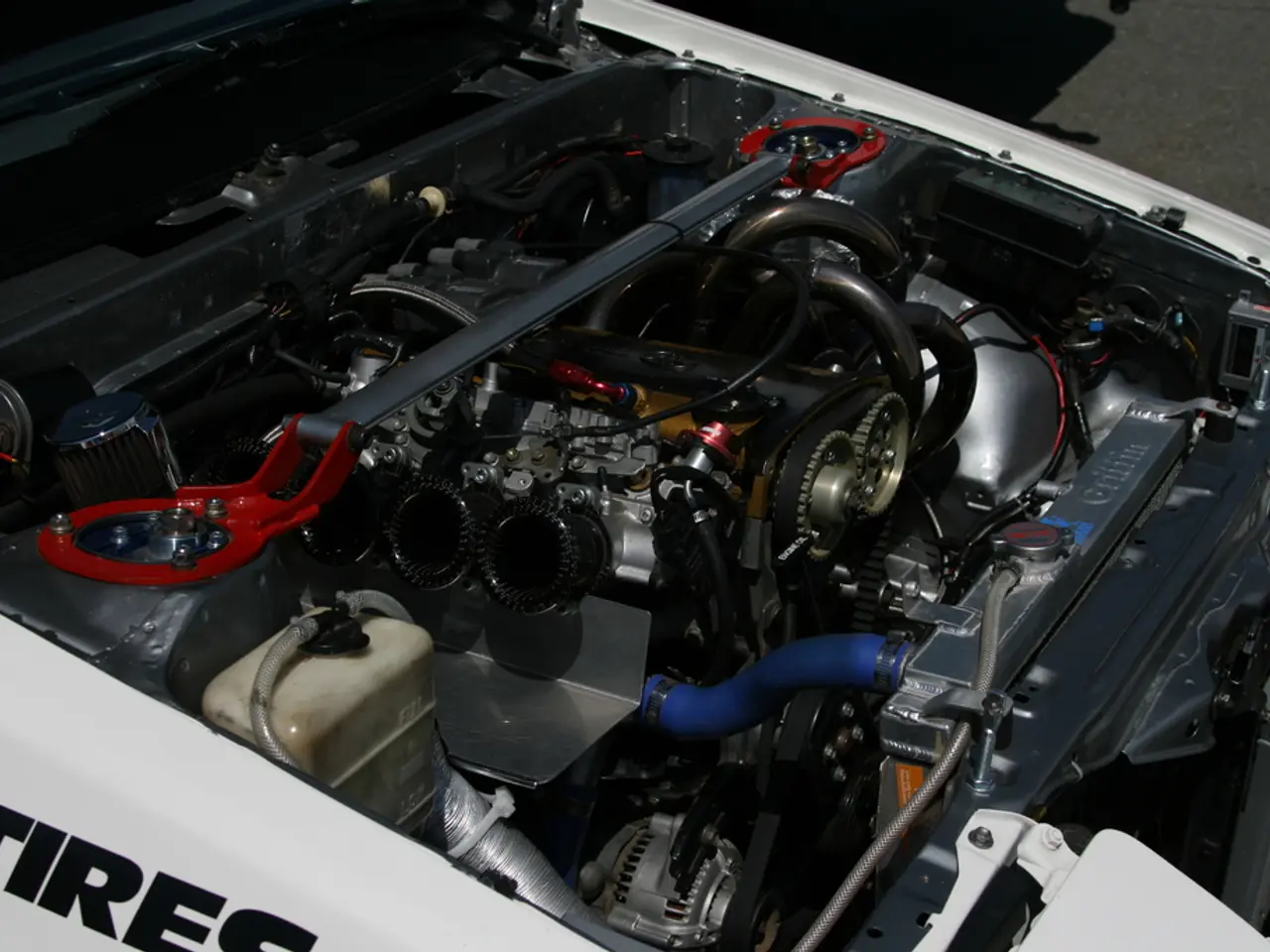
Automaker GM Ponders Strategy Shift, Contemplating Abandonment of Electric Vehicle Motors and Emphasis on V8 Engines, Potentially Leading to Temporary Profit Spike or Enduring Misstep
In a strategic move to navigate current market challenges, General Motors (GM) has adopted a dual-track strategy that supports both electrification and internal combustion engine (ICE) development. Contrary to reports suggesting a total retreat from electrification, the halt of a $300 million investment in electric motor production signifies a recalibration rather than an abandonment of GM's EV commitments.
While the automaker is investing $888 million in new V8 gasoline engines, this decision is not a complete disregard for electric vehicles (EVs). The investment includes the revival or continuation of ICE models like the Chevy Blazer and Cadillac XT5, which were previously planned for discontinuation as GM advanced its EV lineup.
Despite these moves, GM's commitment to electrification remains evident. The company has more than doubled its EV sales in 2025 compared to early 2024, selling over 62,000 electric vehicles from January to May and continuing strong momentum into Q2 with a 111% EV sales increase. The Chevrolet Equinox EV and Cadillac's luxury electric models are among the best-selling EVs in the U.S., bolstering GM's position in the electric vehicle market.
Furthermore, GM's Ultium Cells factory co-owned with LG Energy Solution maintains significant battery production capacity, supporting EV manufacturing and highlighting ongoing investment in EV infrastructure. The company is also hiring talent and investing in R&D to advance its EV technology, aiming to address cost and competitiveness issues.
This strategic approach suggests that GM is not abandoning electrification but adjusting its strategy to remain competitive and financially sustainable during the transition. The company is balancing near-term market and financial realities by investing heavily in ICE platforms while continuing to grow its EV business and infrastructure.
However, this decision comes with risks. By de-emphasizing in-house EV motor production and heavily investing in V8s, GM risks falling behind competitors in the EV race. Tesla remains the dominant force in the pure-EV space, constantly innovating and expanding. Chinese automakers are rapidly advancing their EV technology and market penetration, and major markets like Europe and China are aggressively pushing EV adoption.
The true test will be whether this strategic detour allows GM to build a stronger foundation for its electric future, or if it merely delays the inevitable challenges of a transforming industry. In the U.S., Ford has maintained a strong public commitment to its EV plans, investing heavily in new battery plants and EV production lines. Aggressive investment in charging infrastructure or innovative battery technologies could have differentiated GM and cemented its leadership in the EV space.
In conclusion, General Motors' recent actions reflect a pragmatic response to current market challenges. The company is balancing near-term market and financial realities by investing heavily in ICE platforms while continuing to grow its EV business and infrastructure. This suggests GM is not abandoning electrification but adjusting its strategy to remain competitive and financially sustainable during the transition.
The strategic moves by General Motors indicate a continued investment in electric vehicles (EVs), as the company's EV sales have more than doubled in 2025 compared to early 2024.
GM's ongoing investment in EV technology, such as the Ultium Cells factory and R&D efforts, underscores its commitment to remaining competitive in the electric vehicle market.




