
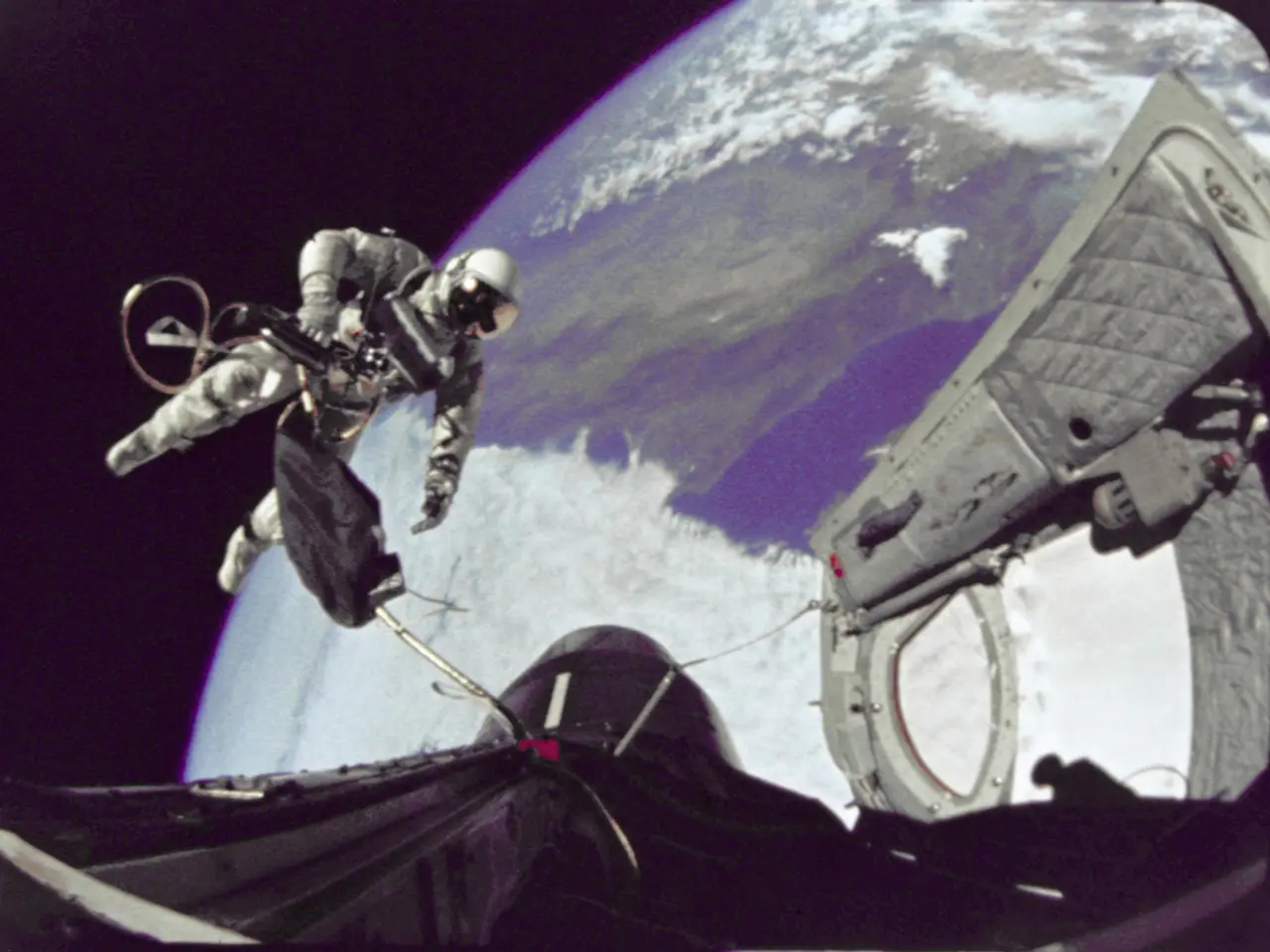
Astronauts from SpaceX's Crew-10 Mission Initiate Their Journey Back to Earth
The SpaceX Crew-10 mission, which spent approximately five months aboard the International Space Station (ISS), returned to Earth with a splashdown off the California coast on August 9, 2025. The undocking occurred on August 8 at 6:15 p.m. EDT, followed by splashdown at 11:33 a.m. EDT the next day. This marked NASA's first Commercial Crew Program mission to splash down in the Pacific Ocean.
During their 148-day mission, astronauts Anne McClain, Nichole Ayers (both NASA), Takuya Onishi (JAXA), and Kirill Peskov (Roscosmos) conducted numerous experiments. Their research focused on plant and microalgae growth in microgravity, impacts of space radiation on DNA in plants, and effects of microgravity on human eye structure and cellular biology. These studies aim to enhance scientific understanding and support future human exploration of the Moon and Mars.
In addition to scientific work, McClain and Ayers performed a spacewalk on May 1, 2025, that involved relocating a communication antenna and beginning installation of a mounting bracket for a forthcoming ISS Roll-Out Solar Array—a key maintenance and upgrade task supporting station functionality.
The Crew-10 mission marks a critical milestone in NASA’s ongoing Commercial Crew Program, demonstrating the sustained human presence in low Earth orbit through partnerships with commercial providers like SpaceX. The mission helped validate spacecraft and operational systems, provided valuable scientific data, and continued the assembly and upkeep of the ISS infrastructure.
The Dragon capsule, owned by SpaceX, detached from the ISS at 2215 GMT on Friday. Upon splashdown, the capsule will be recovered by a SpaceX ship and hoisted aboard. The astronauts will finally be able to breathe Earth's air again, for the first time in months.
The launch of Crew-10 in March allowed two US astronauts, Butch Wilmore and Suni Williams, to return home after being unexpectedly stranded on the space station for nine months. The launch of Butch Wilmore and Suni Williams in June 2024 was intended for an eight-day mission as a test of the Boeing Starliner's first crewed flight. However, the spaceship developed propulsion problems and was deemed unfit to fly back, leaving them stranded in space until the arrival of Crew-10.
This mission advances NASA’s strategic goals to extend human spaceflight capabilities, enhance scientific research in orbit, and demonstrate commercial partnerships' effectiveness in accessing space.
| Aspect | Detail | |-------------------------------------|-------------------------------------------------------------------------------------| | Mission duration | About 148 days (March 14 to August 9, 2025) | | Crew members | Anne McClain (NASA), Nichole Ayers (NASA), Takuya Onishi (JAXA), Kirill Peskov (Roscosmos) | | Return timeline | Undocked Aug 8, 6:15 p.m. EDT; splashdown Aug 9, 11:33 a.m. EDT off California coast | | Scientific experiments | Plant and microalgae growth, DNA radiation effects, human eye and cell biology in microgravity | | Spacewalk activities | Communications antenna relocation, mounting bracket installation for solar array | | Impact on Commercial Crew Program | First Pacific splashdown, validated systems for ongoing human spaceflight missions | | Stranded astronauts | Butch Wilmore and Suni Williams (returned home with Crew-10) | | Stranded mission | Boeing Starliner (June 2024) due to propulsion problems |
- The scientific experiments conducted during the Crew-10 mission, such as research on plant and microalgae growth, impacts of space radiation on DNA in plants, and effects of microgravity on human eye structure and cellular biology, are crucial for enhancing scientific understanding and supporting future human exploration of the Moon and Mars.
- The advanced technology utilized in the SpaceX Dragon capsule, including its spacecraft and operational systems, has been validated during the Crew-10 mission, marking a significant step in demonstrating commercial partnerships' effectiveness in accessing space and enabling sustained human presence in low Earth orbit through programs like NASA's Commercial Crew Program.




